What's inside
A landing zone is a set of decisions that are cheap to make on the first day and expensive to change once workloads depend on them.
This independent guide follows Microsoft's Cloud Adoption Framework through every design area of an Azure landing zone, explains what each decision commits you to, and then builds the result as code. It is written for engineers and architects who already know the individual Azure services and now have to design, build or run an estate of many subscriptions.
Four parts, fifteen chapters
- The framework: what the Cloud Adoption Framework is for, what a landing zone is and isn't, the platform and workload landing zones, the minimum viable platform, and the eight design areas as a decision process with a decision log.
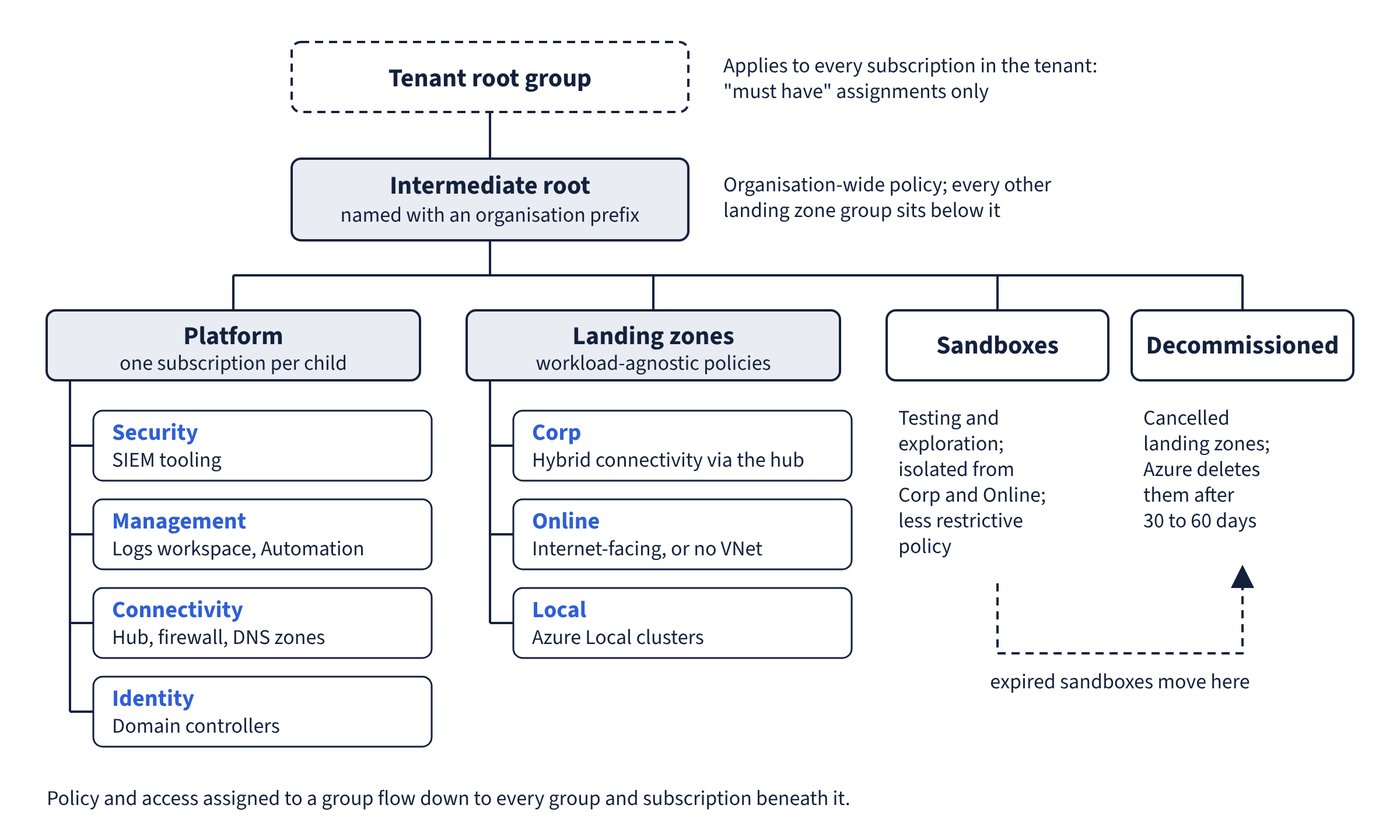
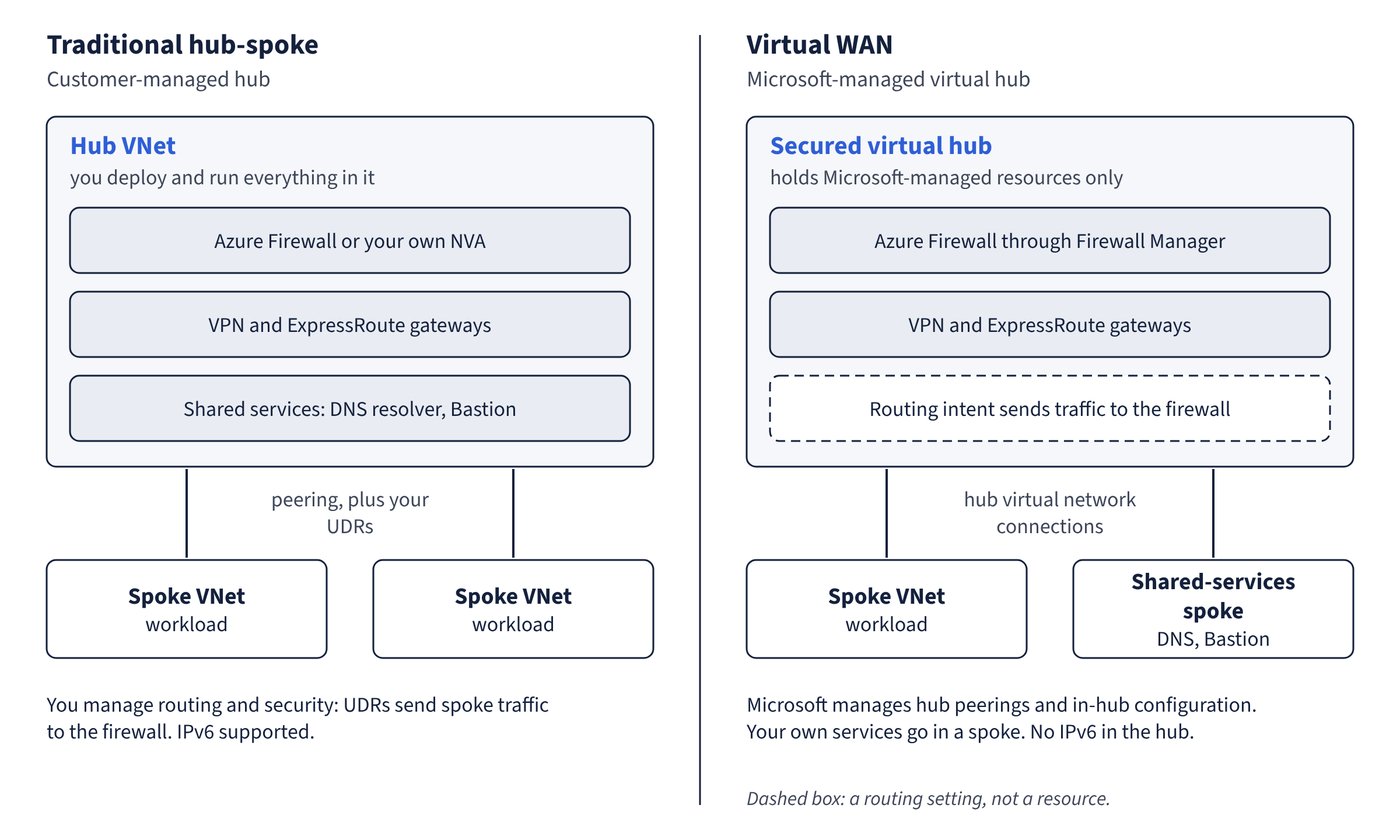
- Environment design areas: billing offers and the Microsoft Entra tenant, platform identity and access with PIM and emergency access, the management group hierarchy, naming and tagging, subscription vending, hub-spoke and Virtual WAN networks, ExpressRoute and VPN, DNS and private endpoints at scale.
- Compliance design areas: governance with Azure Policy by archetype, Defender for Cloud and Microsoft Sentinel, the Sovereign Landing Zone, Log Analytics and data collection, Azure Monitor Baseline Alerts, patching and backup through policy, and platform automation with the Azure Landing Zones IaC Accelerator and workload identity federation.
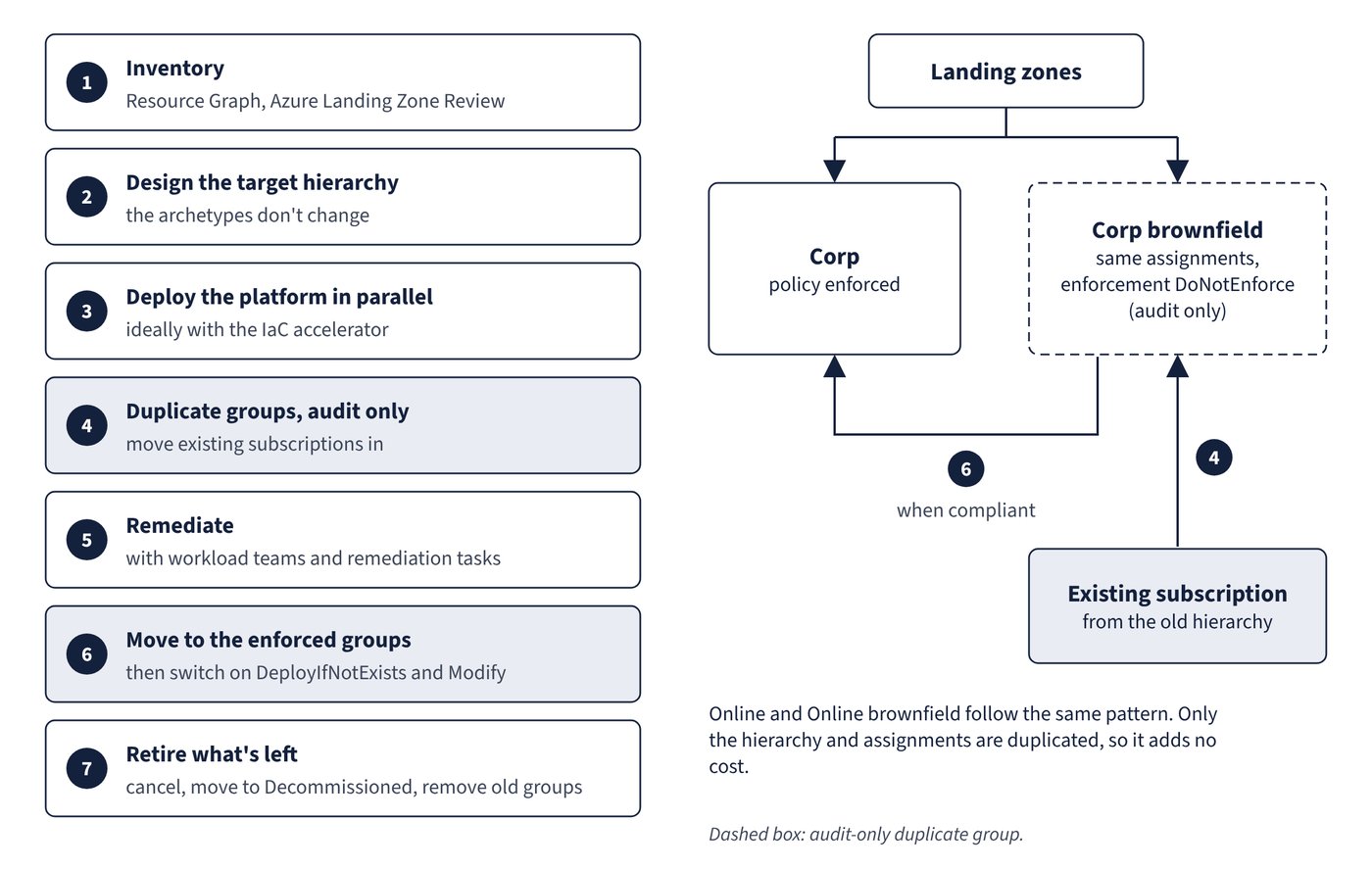
- Living with a landing zone: workload landing zones for data and AI, sandboxes and decommissioning, adopting existing subscriptions, bringing resources under code, drift, reviews and the platform team's operating model.
Inside
- Comparison tables for the close calls, such as which billing offer, which firewall tier, hub-spoke or Virtual WAN, which policy effect, and Bicep or Terraform.
- 174 Common pitfall callouts that name the mistakes real estates make and what to do instead.
- 15 architecture diagrams, from the CAF phases and the management group hierarchy to private endpoint DNS, policy inheritance and the brownfield transition.
- Build it sections in chapters 4 to 15, with Terraform and Bicep built on Azure Verified Modules in a free companion repository on GitHub, deployed and destroyed in a test tenant, with what to expect and what to watch for when you run it.
- A glossary of 340 terms, each linked to Microsoft Learn, with a free online version for print readers.
Up to date
Azure changes quickly. This edition reflects Microsoft's documentation as of October 2026, including the move from application to workload landing zones, the Azure Verified Modules-based accelerator and the trimmed Cloud Adoption Framework scenarios.
Written by Tony Rough, a cloud architect with more than twenty years in IT infrastructure who designs Azure landing zones and holds the Azure Solutions Architect Expert, Azure Administrator and Azure Security Engineer certifications.
Part of the Ultra Transcenders series from Distilled Press: Beyond the Exam. An independent publication, not affiliated with, sponsored by or endorsed by Microsoft Corporation.