An independent study guide for Veeam Certified Engineer+ (VMCE+) v13: Book 3 of 3, Veeam Recovery Orchestrator · by Tony Rough
Know which Orchestrator plan, location, step and test makes recovery repeatable, and why.
Due on Amazon in January 2027, in Kindle and paperback editions.
This independent study guide covers Veeam Recovery Orchestrator 13, written from Veeam's own version 13 documentation. It is book 3 of a set of three that follows the three courses required for the Veeam Certified Engineer+ (VMCE+) v13 certification; book 1 covers Veeam Backup & Replication 13 and book 2 Veeam ONE 13.
Ten chapters, each one readable on its own:
There are no exam questions in this book, and it is not Veeam training material. It explains the knowledge the course and the exam look for, so you can reason through situations you have never seen and bring the same judgement to a real recovery plan.
Written by Tony Rough, a cloud architect with over twenty years in IT infrastructure.
Part of the Ultra Transcenders series from Distilled Press. An independent publication, not affiliated with, sponsored by or endorsed by Veeam Software. Veeam, Veeam Recovery Orchestrator and Veeam Backup & Replication are trademarks or registered trademarks of Veeam Software Group GmbH and/or its affiliates.
Veeam's engineer certification for the Veeam Data Platform v13. It requires Veeam's three courses (Backup & Replication, Veeam ONE and Veeam Recovery Orchestrator) before the proctored exam; this set has one book per course. The series covers every exam it needs:
Know which Veeam job, repository and restore option fits, and why.
Due on Amazon in January 2027, in Kindle and paperback editions.
Know which Veeam ONE view, alarm, report or dashboard answers the question, and why.
Due on Amazon in January 2027, in Kindle and paperback editions.
Every skill area in Veeam's VRO-13 outline (as of Course module list as summarised by a course taker (Veeam Community, March 2026)), and the chapters that cover it.
| Skill area | Weight | Chapters |
|---|---|---|
| Course modules | — | 1, 2, 3, 4, 5, 6, 7, 8, 9, 10 |
| VMCE+ v13: Orchestration and Disaster Recovery | 10% | 2, 6, 7, 8, 10 |
Plus an appendix glossary of 100+ terms, each linked to the Veeam Help Center, with the same terms explained free online for print readers.
Short excerpts from the book, exactly as they appear in it, so you can see how it explains things.
The opening of chapter 1 · Chapter 1: Recovery orchestration and Veeam Recovery Orchestrator
Backups and replicas only prove their worth when they can be brought back in the right order, in the right place and within the time the business expects. Veeam Recovery Orchestrator turns the recovery features of Veeam Backup & Replication into documented, repeatable and testable recovery plans. This chapter explains why orchestration matters, what Orchestrator relies on, the vocabulary used throughout the rest of the book, the five plan types, the recovery scenarios Orchestrator is built for and what changed in version 13.
A comparison table · Chapter 1: Recovery orchestration and Veeam Recovery Orchestrator · How Orchestrator builds on Veeam Backup & Replication, Veeam ONE and storage replication
Out of the box, Veeam ONE Client also provides a predefined category named B&R Job, containing groups of VMs protected by backup jobs, replication jobs and CDP policies on connected backup servers. Storage plans are the exception to Veeam ONE categorisation: their groups come from a native Orchestrator algorithm that groups VMs by datastore. Book 2 of this set covers Veeam ONE itself; Chapter 4: Connecting infrastructure and grouping workloads covers categorisation methods.
| Orchestrator needs | Comes from | Practical consequence |
|---|---|---|
| Backups, replicas, CDP replicas | Jobs and policies on connected Veeam Backup & Replication servers | A machine with no suitable job cannot be recovered by a plan; protection is configured in Veeam Backup & Replication (book 1 of this set) |
| Replicated storage snapshots | NetApp ONTAP or HPE storage systems connected to Orchestrator | Storage plans depend on array replication already being in place |
| Inventory groups and resource groups | Embedded Veeam ONE server (Business View) | Group membership is managed in Veeam ONE Client, vSphere tags, SCVMM custom properties or imported CSV data, not in the Orchestrator UI |
| Recovery operations | Veeam Backup & Replication through Orchestrator agents | Remote backup servers must run a supported version and edition |
| Reprotection after recovery | A template backup or replication job marked [VRO Template] in its description |
Orchestrator creates a new job copying all template settings except guest processing; the new job consumes Veeam Backup & Replication licences |
A common trap · Chapter 1: Recovery orchestration and Veeam Recovery Orchestrator · Why orchestrate recovery
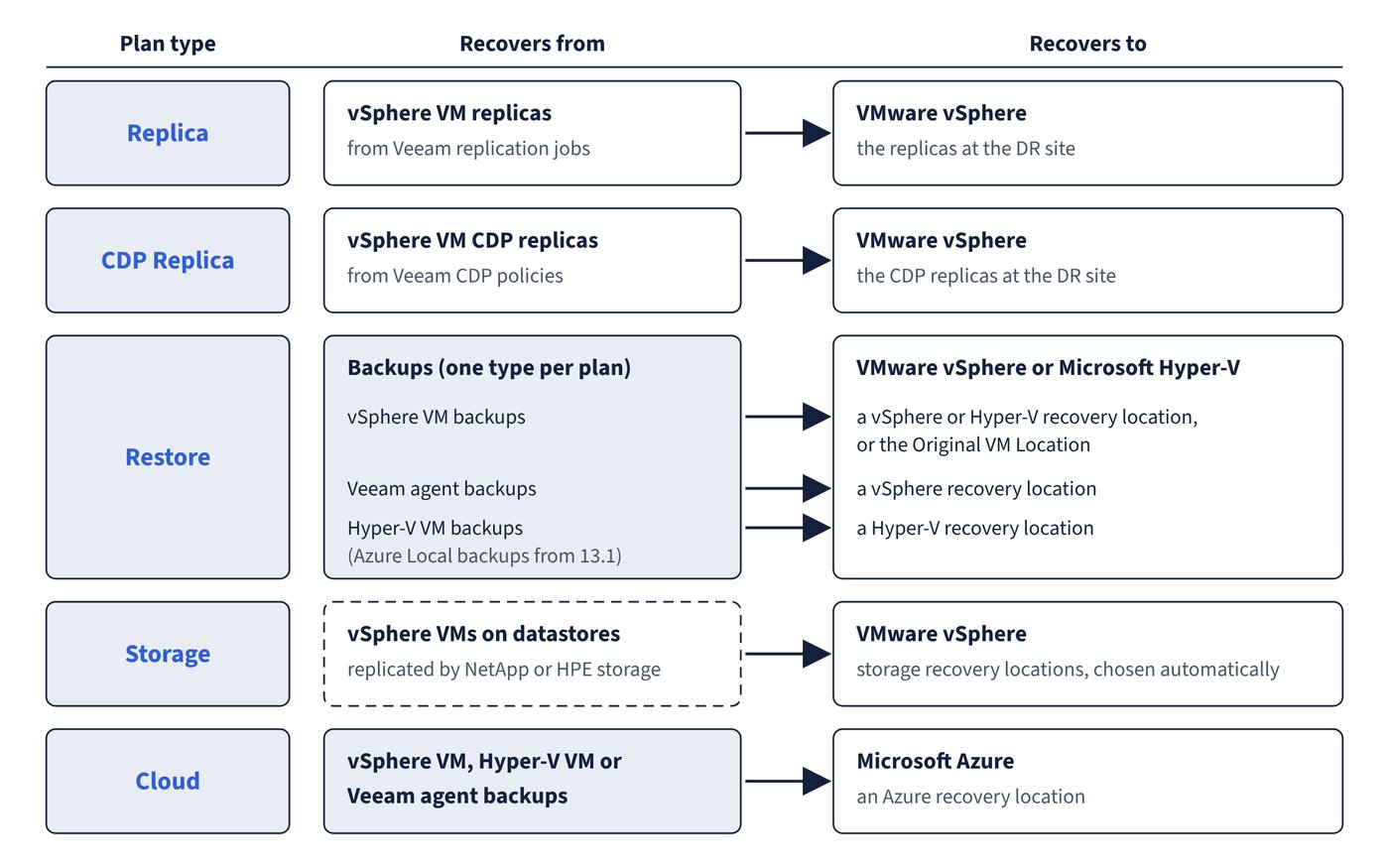
Common trap: Assuming Orchestrator can recover any protected workload to any platform - recovery to Hyper-V is for virtual machines only. Veeam agent backups of physical machines can be restored to vSphere (restore plans) or Azure (cloud plans), but not to Hyper-V.


Some sections of the book, free to read online:
Replica, CDP replica, restore, storage and cloud plans: what each recovers from and where.
What each Orchestrator role can and cannot do, and why building and running plans are separate.
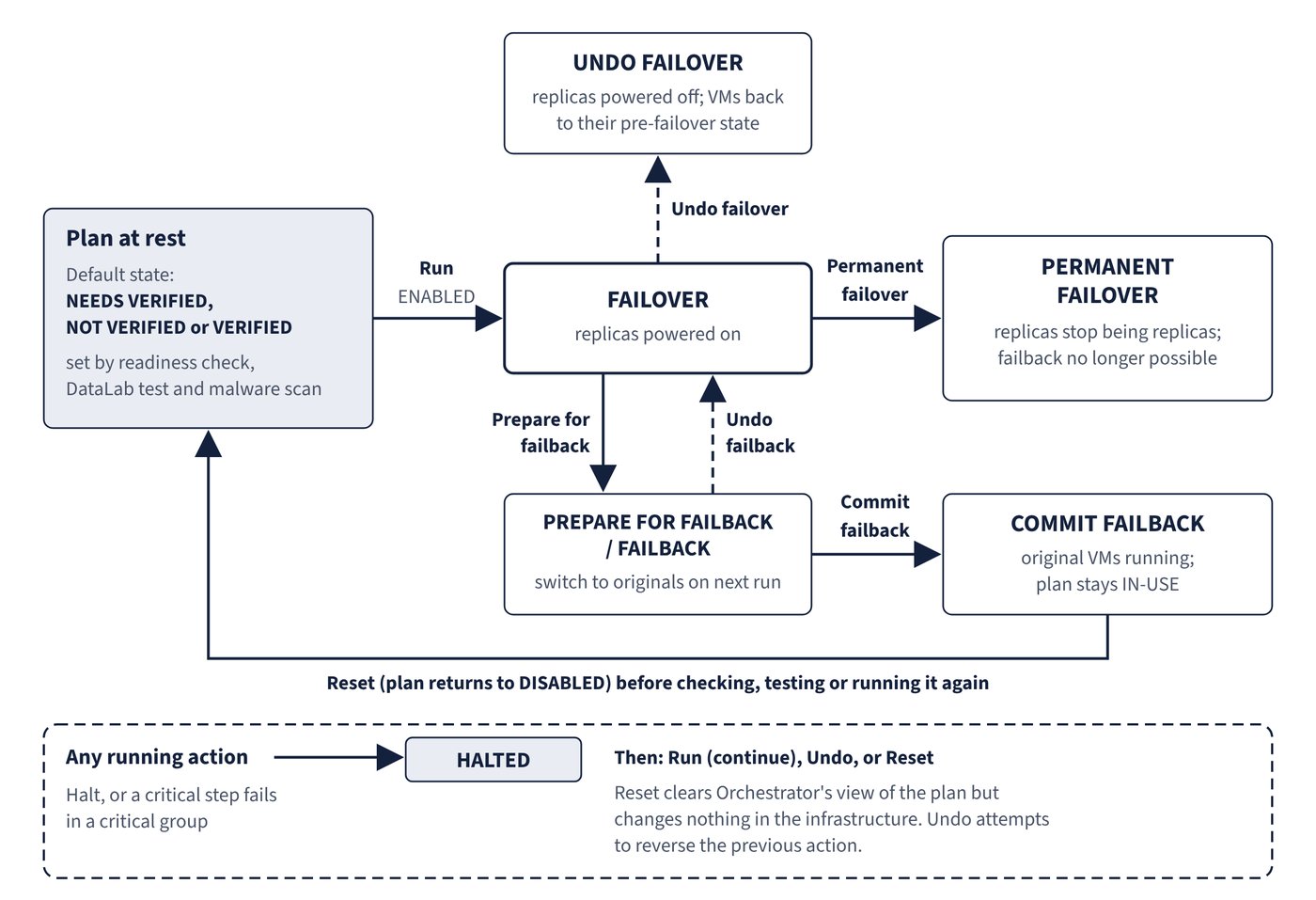
How a plan's state shows its readiness and its mode shows what it is doing.
What a readiness check verifies, how often it runs and what it costs compared with a DataLab test.
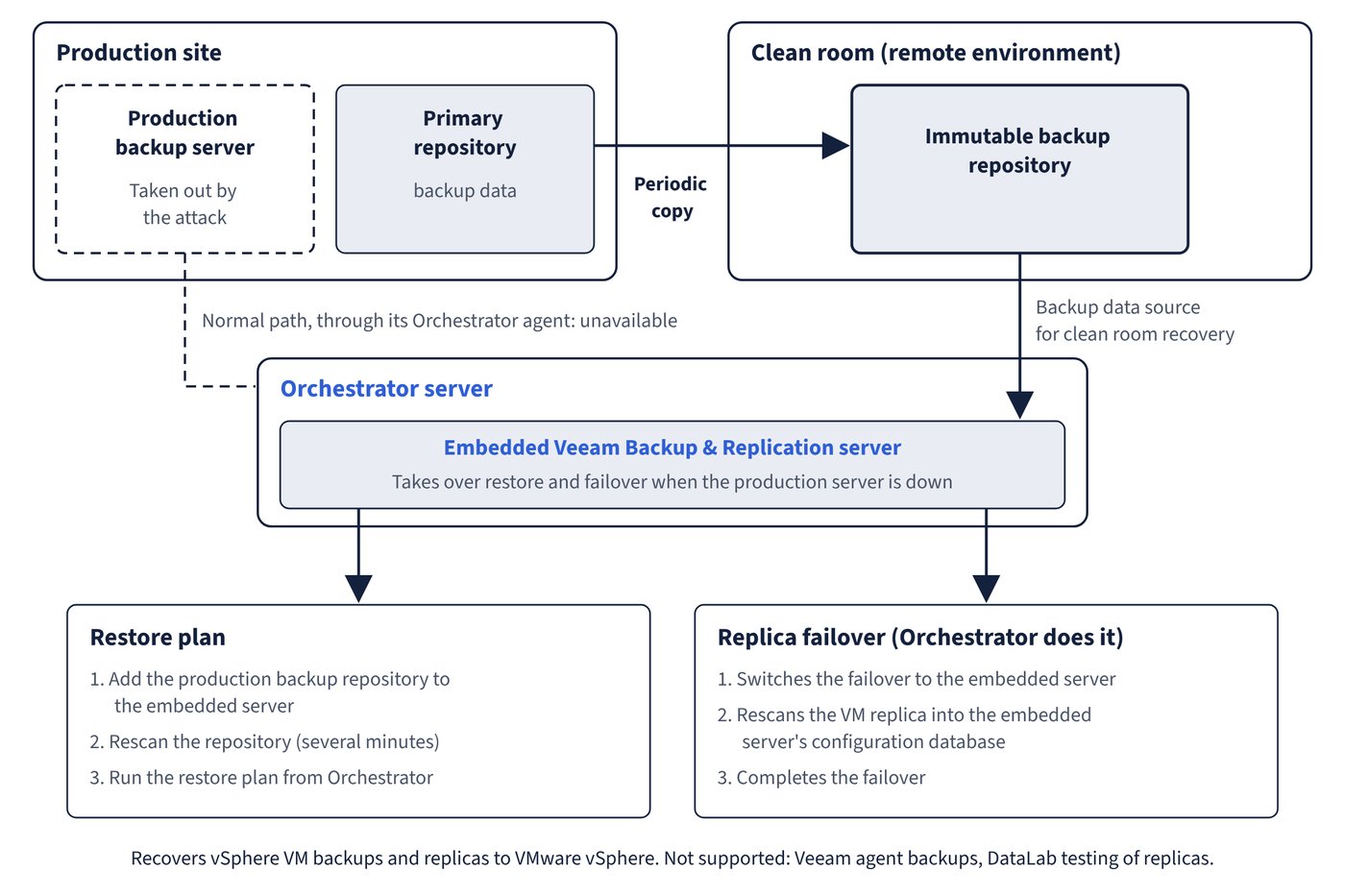
How the embedded backup server restores and fails over in a clean room when production is lost.
A free week-by-week plan through the book at a 4-week or 8-week pace, with the study notes and exam skill areas for each week.