An independent study guide for Veeam Certified Engineer+ (VMCE+) v13: Book 1 of 3, Backup & Replication · by Tony Rough
Know which Veeam job, repository and restore option fits, and why.
Due on Amazon in January 2027, in Kindle and paperback editions.
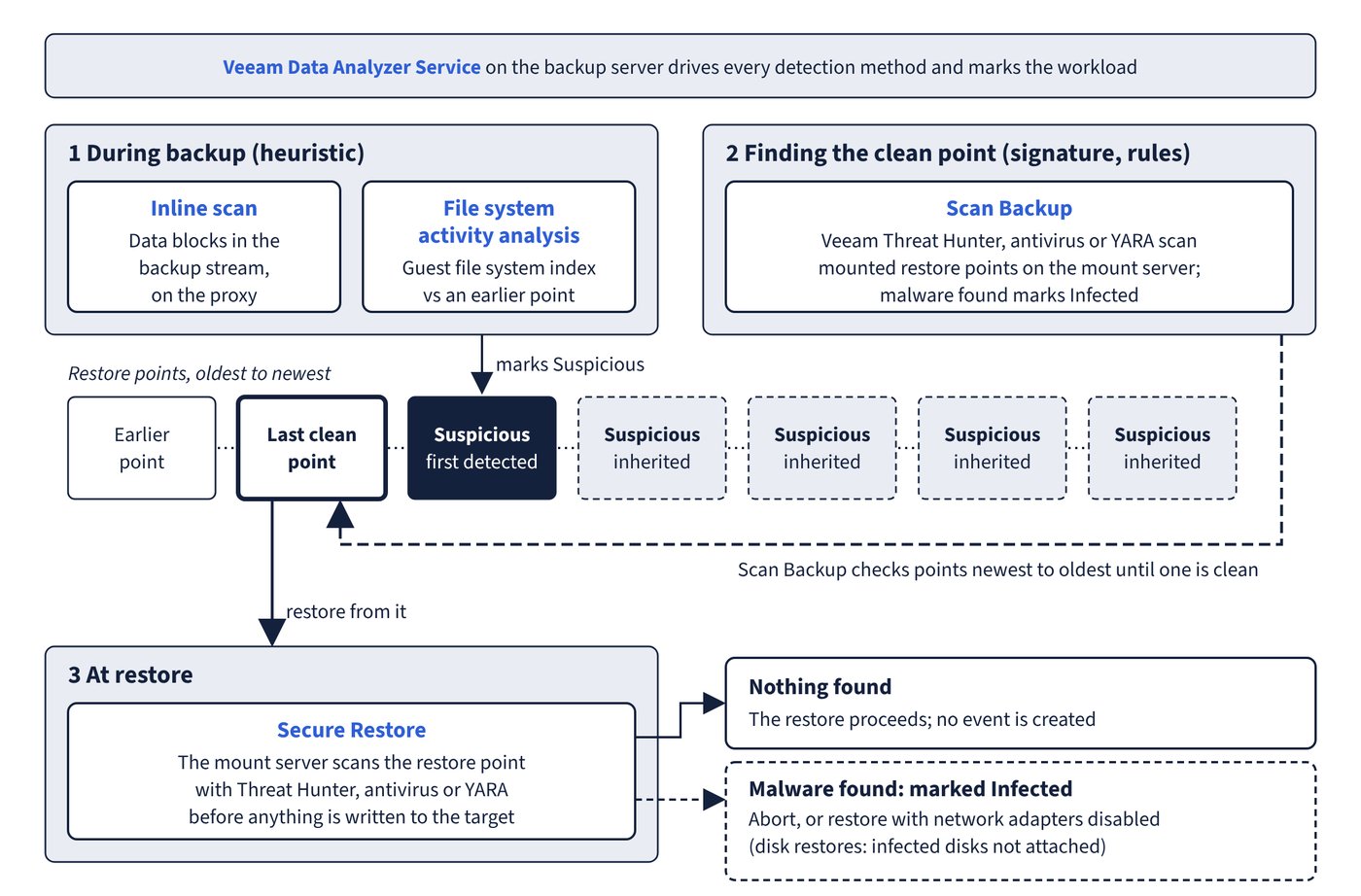
This independent study guide covers Veeam Backup & Replication 13, written from Veeam's own version 13 documentation. It is book 1 of a set of three that follows the three courses required for the Veeam Certified Engineer+ (VMCE+) v13 certification, and it suits engineers coming back to Veeam after working with version 12: the notes on what changed, from the Linux-based Veeam Software Appliance to the expanded malware detection, are throughout.
Fourteen chapters, each one readable on its own:
There are no exam questions in this book, and it is not Veeam training material. It explains the knowledge the courses and the exam look for, so you can reason through situations you have never seen and bring the same judgement to a real backup environment.
Written by Tony Rough, a cloud architect with over twenty years in IT infrastructure.
Part of the Ultra Transcenders series from Distilled Press. An independent publication, not affiliated with, sponsored by or endorsed by Veeam Software. Veeam, Veeam Backup & Replication and SureBackup are trademarks or registered trademarks of Veeam Software Group GmbH and/or its affiliates.
Every skill area in Veeam's VBR-13 outline (as of September 2026 (course data sheet H54GGS C.00)), and the chapters that cover it.
| Skill area | Weight | Chapters |
|---|---|---|
| Course objectives | — | 1, 2, 3, 4, 5, 6, 7, 8, 9, 10, 11, 12, 13, 14 |
| Course topics | — | 1, 4, 5, 6, 7, 8, 9, 10, 11, 12, 13, 14 |
Plus an appendix glossary of 400+ terms, each linked to the Veeam Help Center, with the same terms explained free online for print readers.
Short excerpts from the book, exactly as they appear in it, so you can see how it explains things.
The opening of chapter 1 · Chapter 1: Data protection strategy and the Veeam Data Platform
Every Veeam design starts with business questions rather than product features: how much data can the organisation afford to lose, how quickly must each service come back, and which threats must the backups survive. This chapter turns those questions into recovery point and recovery time objectives, maps them to Veeam Backup & Replication 13 features, and frames the 3-2-1 rule and its 3-2-1-1-0 extension. It closes with the scope of what Veeam Data Platform protects in v13 and where the companion products fit. Later chapters cover each feature in depth; this one gives the decision framework that ties them together.
A comparison table · Chapter 1: Data protection strategy and the Veeam Data Platform · The 3-2-1 rule and the 3-2-1-1-0 extension
The Veeam Best Practices security guide expands the rule to 3-2-1-1-0. The extra 1 means keeping at least one copy of the backups on immutable, air-gapped or offline media (ideally all copies immutable). The 0 means zero errors when automatic recoverability verification is enforced, using SureBackup jobs to prove that backups or replicas can be recovered. The same guidance recommends that short-term retention be immutable for at least one to two weeks and long-term retention for at least four weeks.
| Rule element | Veeam features that deliver it | Owning chapter |
|---|---|---|
| 3 copies | Backup job plus backup copy job, backup to tape, or SOBR capacity tier copy | Chapter 8: Backup copy, long-term retention and the 3-2-1 rule |
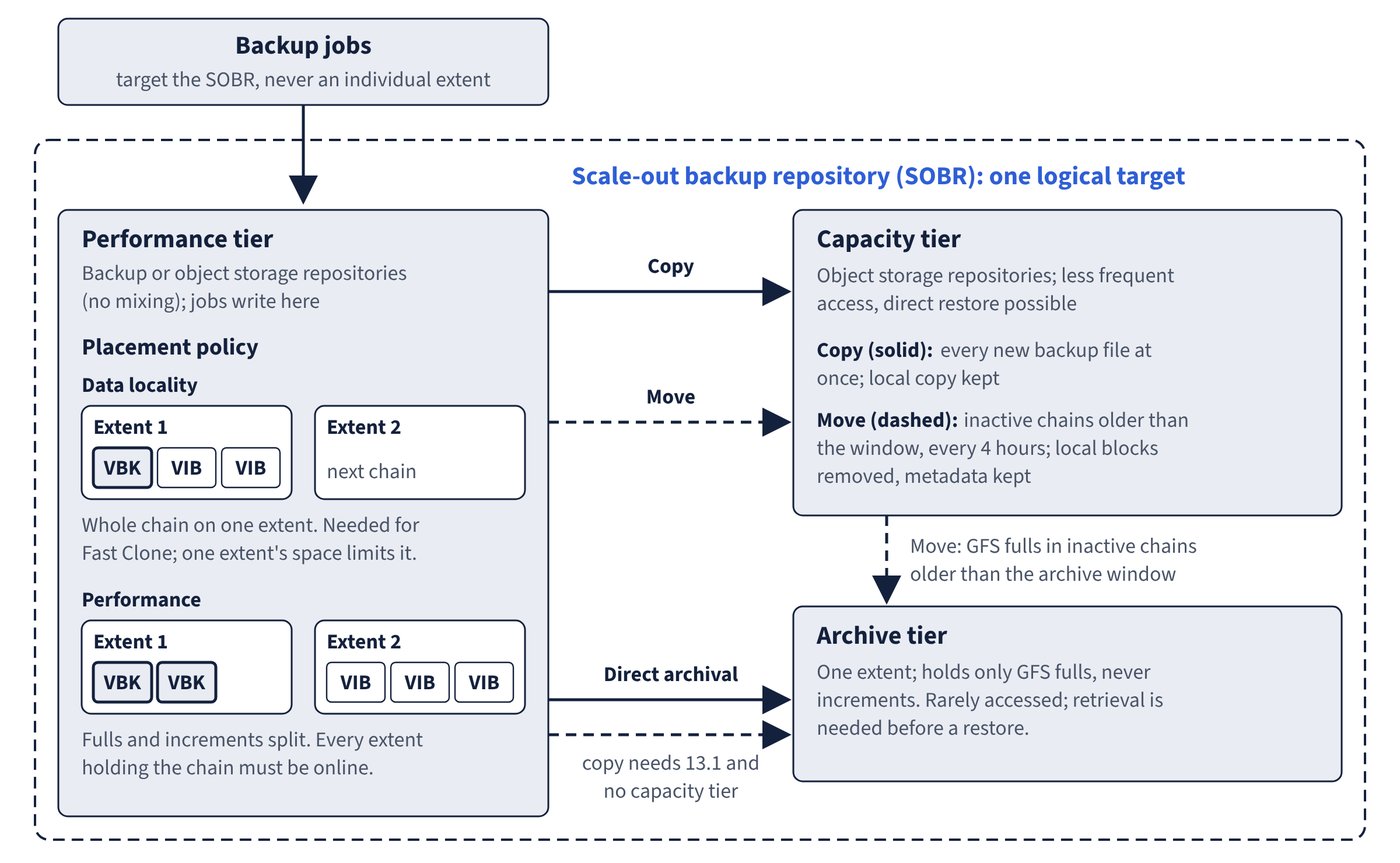
| 2 media | Disk repositories plus object storage, tape or deduplicating appliance | Chapter 7: Repositories: hardened, immutable, object storage and scale-out |
| 1 off-site | Backup copy to a remote site, object storage or Veeam Cloud Connect; off-site replicas | Chapters 8 and 9 |
| 1 immutable, air-gapped or offline | Hardened repository, object storage immutability, WORM-capable SMB/NFS shares, Data Domain and StoreOnce immutability, tape, rotated drives | Chapter 7 |
| 0 errors | SureBackup recovery verification, health checks | Chapter 10: Recovery verification: SureBackup and virtual labs |
A common trap · Chapter 1: Data protection strategy and the Veeam Data Platform · Business objectives: RPO, RTO and protection scope
Common trap: Treating RPO as “how long a restore takes” - RPO measures data loss (the age of the last usable restore point); the time to bring services back is RTO, and it depends on the recovery method as much as on the job schedule.


Some sections of the book, free to read online:
How a backup proxy reads VM data, the order Veeam tries the modes in, and when it falls back to Network mode.
Where the full backup sits in each chain, what each method costs in storage and I/O, and why reverse incremental is deprecated in v13.
Immutability, single-use and certificate-based credentials, and what a hardened repository will not let you do.
How each backup copy mode picks restore points, when it runs and how GFS fulls are created.
Which Veeam technology meets a recovery point and recovery time objective, and what each keeps.
A free week-by-week plan through the book at a 4-week or 8-week pace, with the study notes and exam skill areas for each week.