An independent study guide for Microsoft Certified: Azure Network Engineer Associate · by Tony Rough
Know where the traffic flows, and why.
Free to read with Kindle Unlimited. Opens Amazon in a new tab.
Free glossary of the book's terms
First edition · published September 2026
This independent study guide for the Microsoft Certified: Azure Network Engineer Associate exam distils what AZ-700 really expects you to understand into the comparisons, limits and traps that network designs turn on. No padding, no screenshots, no memorised answers: just the reasoning you need to pick the right gateway, SKU, route or security control for a set of requirements.
Sixteen chapters, each readable on its own and together covering all five AZ-700 skills areas:
Azure networking changes quickly. This edition reflects Microsoft's documentation as of October 2026, including recent retirements such as Basic public IPs, non-zone-redundant VPN gateway SKUs and Application Gateway v1, and notes where the traditional answer and today's product differ.
This book contains no exam questions. It explains the knowledge the exam expects, so you can answer questions you have never seen and use the same judgement when you design real networks.
Written by Tony Rough, a cloud architect with more than twenty years in IT infrastructure who holds the Azure Solutions Architect Expert, Azure Administrator and Azure Security Engineer certifications.
Part of the Ultra Transcenders series from Distilled Press. An independent publication, not affiliated with, sponsored by or endorsed by Microsoft Corporation.
Every skill area in Microsoft's AZ-700 outline (as of July 27, 2026), and the chapters that cover it.
| Skill area | Weight | Chapters |
|---|---|---|
| Design and implement core networking infrastructure | 25–30% | 1, 2, 3, 4, 5, 9, 10, 16 |
| Design, implement, and manage connectivity services | 20–25% | 3, 5, 6, 7, 8, 16 |
| Design and implement application delivery services | 15–20% | 9, 10, 11 |
| Design and implement private access to Azure services | 10–15% | 2, 12 |
| Design and implement Azure network security services | 15–20% | 3, 4, 8, 13, 14, 15, 16 |
Plus an appendix glossary of 600+ terms, each linked to Microsoft Learn, with the same terms explained free online for print readers.
Short excerpts from the book, exactly as they appear in it, so you can see how it explains things.
The opening of chapter 1 · Chapter 1: Virtual networks and IP addressing
Every Azure networking design starts with the virtual network: where it lives, what address space it owns and how that space is carved into subnets. This chapter covers the scope of a VNet, how to size subnets once Azure has taken its reserved addresses, IPv6 and dual-stack subnets, the services that insist on a dedicated or delegated subnet, and which resources actually consume subnet addresses. It closes with public IP addresses and the upgrade path from the retired Basic SKU.
A comparison table · Chapter 1: Virtual networks and IP addressing · Dedicated and delegated subnets
Several Azure services require a subnet with a specific name, a minimum size or a subnet delegation, and that drives how many subnets a VNet needs.
| Service | Subnet requirement |
|---|---|
| VPN gateway / virtual network gateway | Named GatewaySubnet (/27 minimum recommended) |
| Azure Bastion | Named AzureBastionSubnet, /26 minimum |
| Application Gateway v2 | Only application gateways in the subnet |
| App Service regional VNet integration | Own subnet delegated to Microsoft.Web/serverFarms |
| SQL Managed Instance | Own subnet delegated to Microsoft.Sql/managedInstances |
| Azure DNS Private Resolver endpoints | One subnet per inbound/outbound endpoint, delegated to Microsoft.Network/dnsResolvers, /28 minimum |
| Private endpoints | Can share a subnet |
| Microsoft Entra Domain Services (Azure AD DS) | Dedicated subnet recommended, not required |
A common trap · Chapter 1: Virtual networks and IP addressing · Virtual network scope and address space
Common trap: Concluding that a region can’t hold 300 VMs because one /24 subnet has only 251 usable addresses - a /16 VNet isn’t limited to one /24; add further subnets (or VNets) and the VMs fit.
Want more? Amazon offers a longer free sample of the Kindle edition on its Kindle page.


Some sections of the book, free to read online:
How many usable addresses each prefix gives in Azure, why five are always reserved, and how to size subnets for gateways, Bastion and VMs.
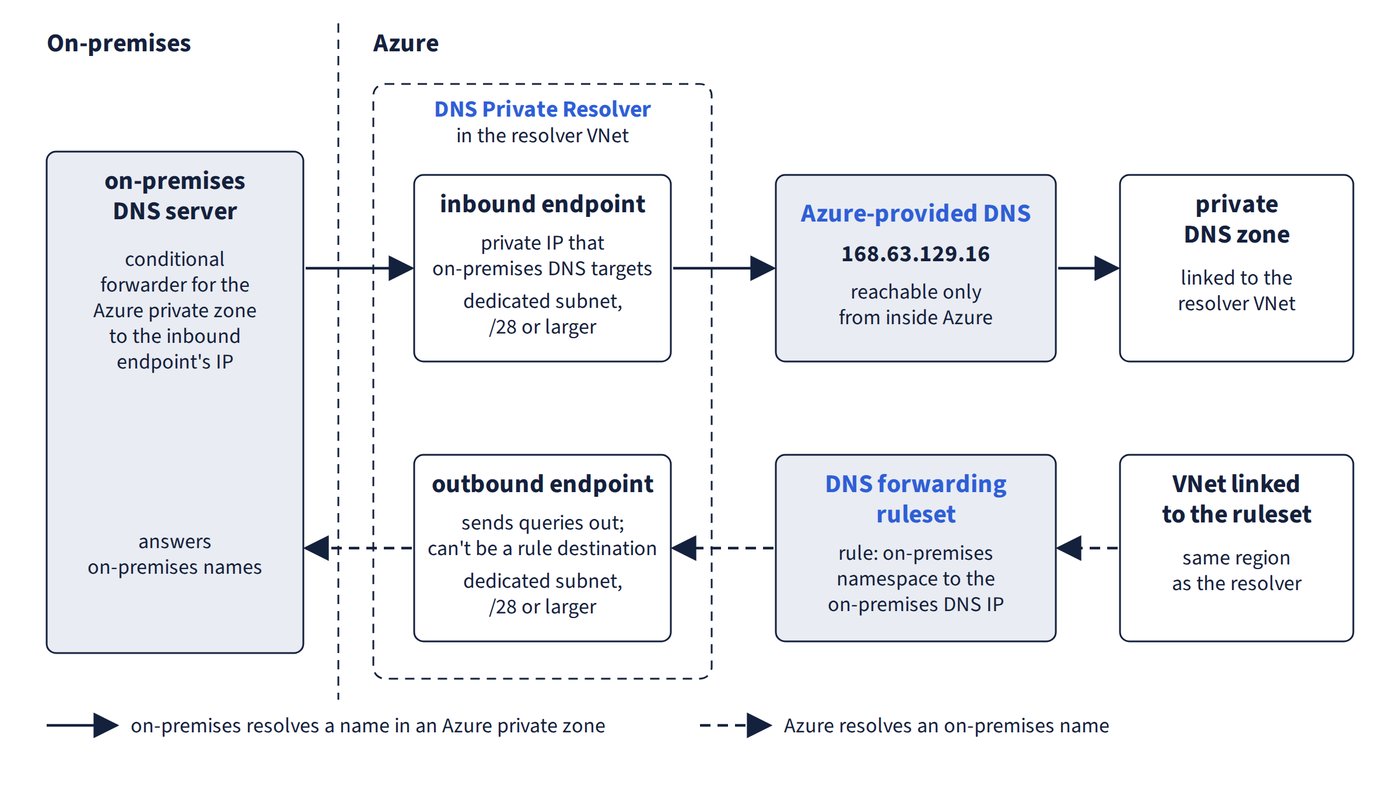
Resolving Azure private zones from on-premises and on-premises names from Azure, with subnet sizing and ruleset rules.
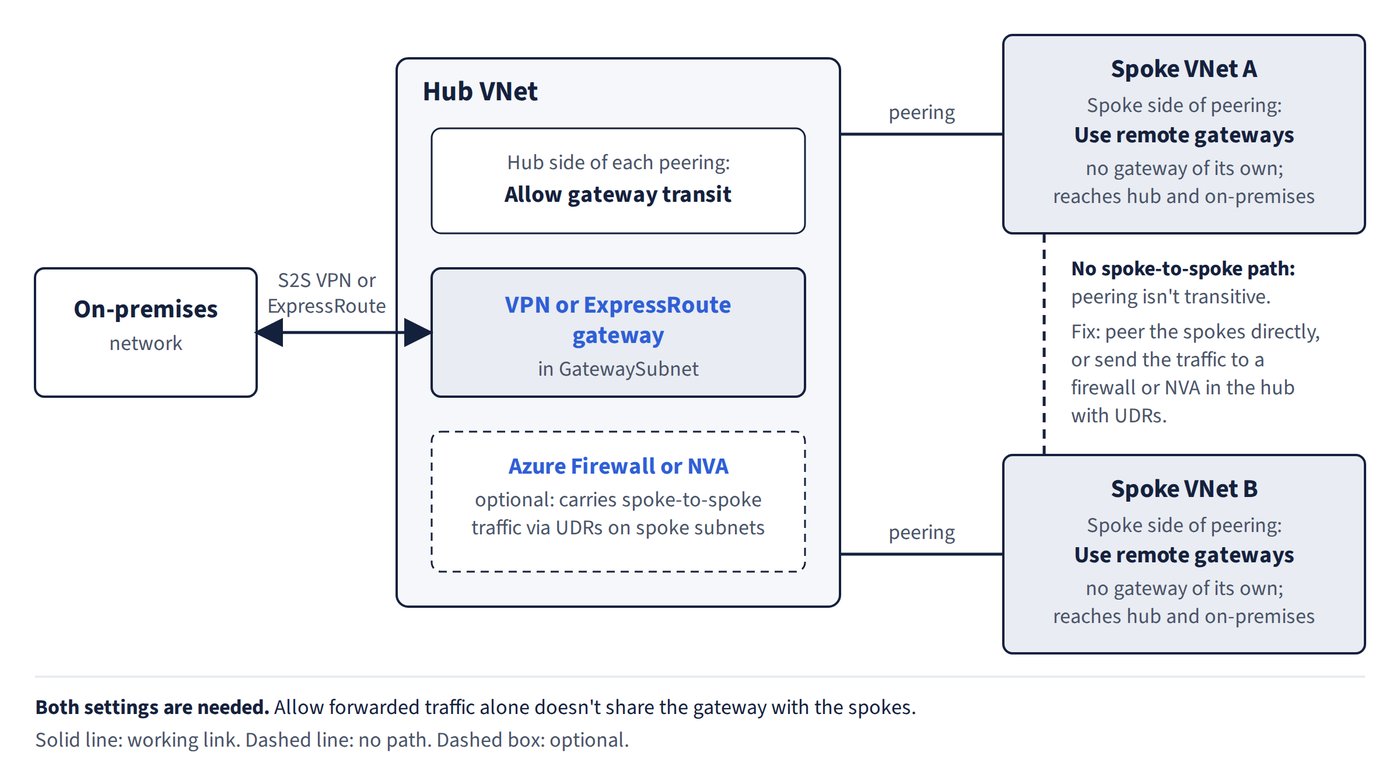
Where each peering setting goes, what spokes can reach, and why peering isn't transitive.
Longest prefix match, system routes versus user-defined routes, and how a 0.0.0.0/0 route forces internet traffic on-premises.
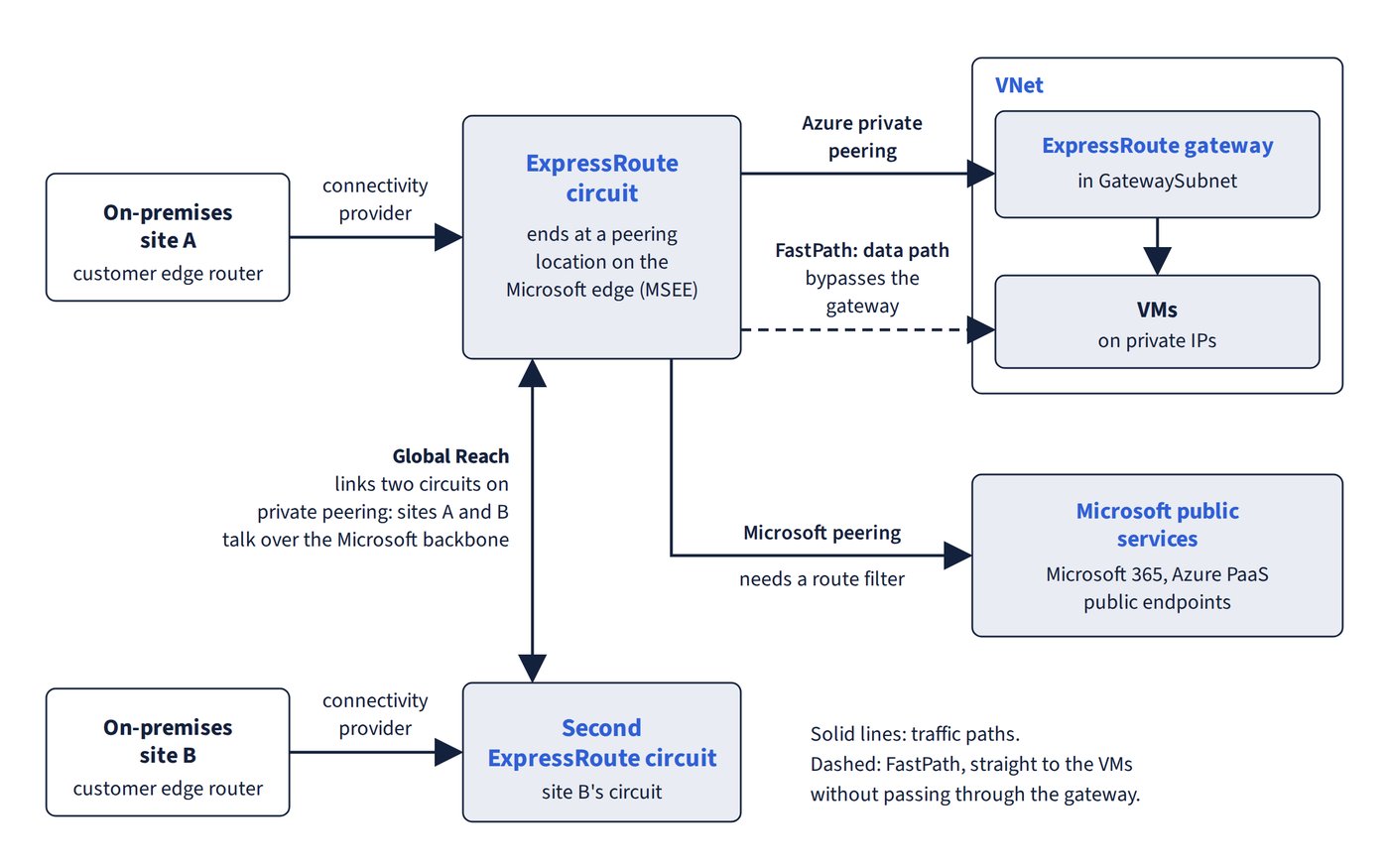
What each ExpressRoute feature does, which SKUs and gateways it needs, and where it fits on a circuit.
A decision guide by traffic type (HTTP or not) and scope (regional or global).
The CNAME chain from a public service name to a private endpoint, zone groups and zone links.
Rule order, the default rules, and what happens to a flow between subnets and to return traffic.
A free week-by-week plan through the book at a 4-week or 8-week pace, with the study notes and exam skill areas for each week.
Short videos on the ideas this exam likes to trap, about five minutes each.
Plays from YouTube when you press play · Watch on YouTube
How each one locks an Azure service down to your network, the on-premises trap, DNS and data exfiltration, and a five-second way to choose. Read the write-up
Plays from YouTube when you press play · Watch on YouTube
Two questions put the four Azure load-balancing services on a grid: web or not, regional or global. Plus three exam traps. Read the write-up
Azure Data Share now has a formal retirement date of 12 November 2029. Azure AI Gateway became a generally available service in its own right, AES keys became generally available in Key Vault Premium and as TDE protectors for Azure SQL Database, and Azure Backup can now protect VMs from a vault in another subscription.
Support for .NET 8 and .NET 9 ended on 10 November 2026 for Azure Functions and Static Web Apps managed functions. Azure Front Door gained post-quantum TLS key exchange and edge actions, both now generally available, and previews of native gRPC and rate limit grouping for Front Door Premium WAF.
Microsoft moved the retirement dates for gpt-4o and extended the deadline for Application Insights query API keys to 31 March 2027. The HTTP DDoS ruleset for Front Door Premium WAF and route maps for Azure Route Server are now generally available, and Azure Firewall application rules for IPv6 are in preview.