A private endpoint is only useful if clients resolve the resource’s normal name to the private IP. Azure does this with privatelink private DNS zones and a CNAME from the public name.
| Resource (sub-resource) | Private DNS zone |
|---|---|
Storage (blob) |
privatelink.blob.core.windows.net |
App Service (sites, Microsoft.Web/sites) |
privatelink.azurewebsites.net |
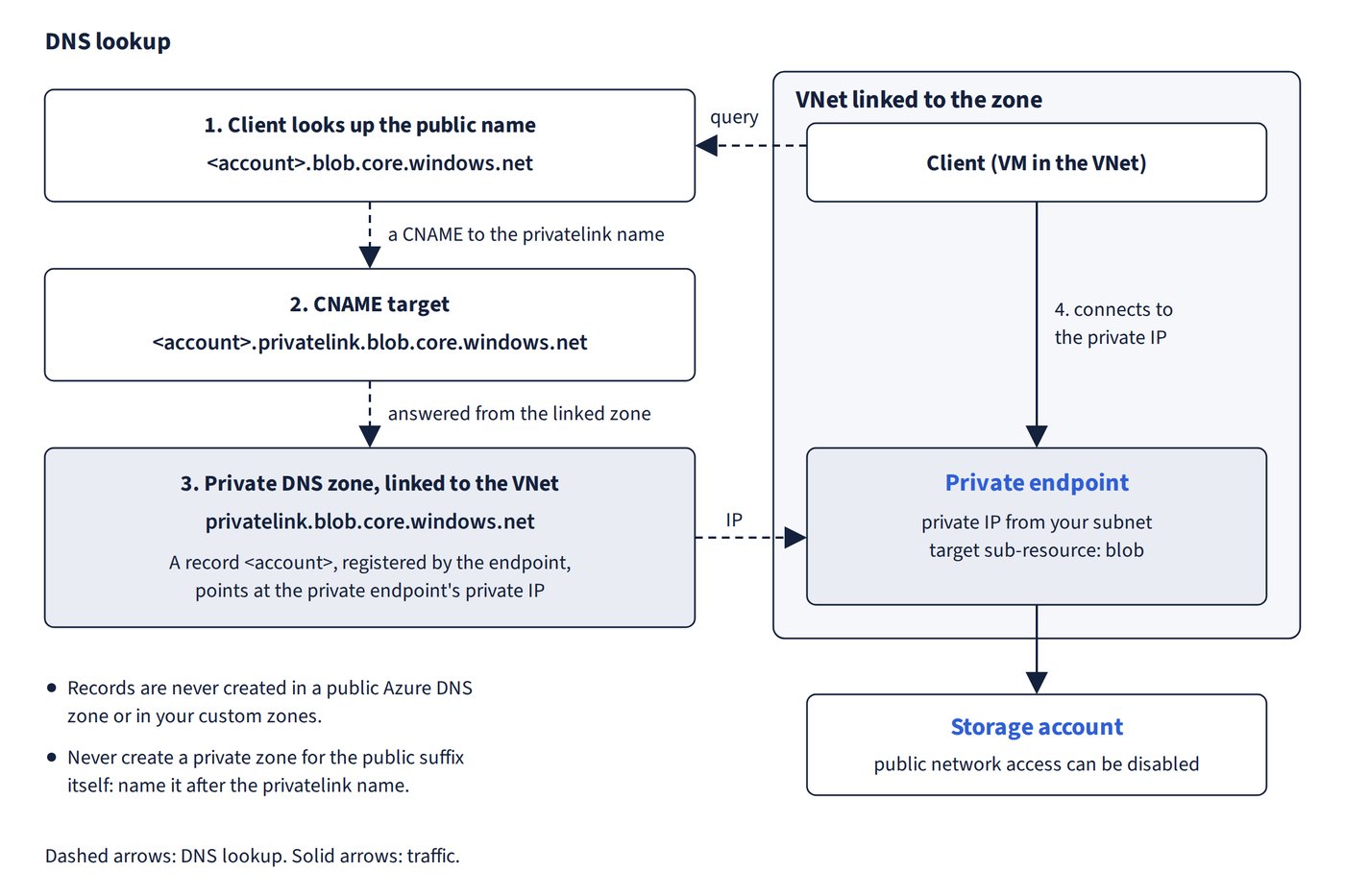
- The endpoint registers an A record in the privatelink zone linked to the VNet, e.g.
<account>.privatelink.blob.core.windows.netormyapp.privatelink.azurewebsites.net, pointing at the private IP. - The public name (
myapp.azurewebsites.net) becomes a CNAME to the privatelink name, so clients in linked VNets resolve the private IP. Figure 12.1 shows the same lookup chain for a storage account. - Records are never created in a public Azure DNS zone or in your custom zones;
<tenant>.onmicrosoft.comis the Microsoft Entra tenant’s initial domain, not an App Service name. - Don’t create a private zone named
azurewebsites.net: it would override public resolution for every web app. - Custom private name: add a CNAME in the custom private zone (
www.private.example.com→mywebapp.privatelink.azurewebsites.net) and add the custom domain to the web app so it accepts the host name.
Common trap: Relying on a private endpoint alone plus a CNAME to an onmicrosoft.com name for a custom private URL - the endpoint alone doesn’t make the custom URL resolve; add a CNAME to the privatelink name and bind the custom domain to the app.