An independent study guide for the TOGAF® Enterprise Architecture Foundation certification · by Tony Rough
Know what each ADM phase achieves, what it produces, and why.
Due on Amazon in January 2027, in Kindle and paperback editions.
This independent study guide for the TOGAF® Enterprise Architecture Foundation certification (exam OGEA-101, TOGAF Enterprise Architecture Part 1) distils what the Foundation syllabus expects you to understand into clear definitions, comparison tables and the traps that catch newcomers. It follows The Open Group's published syllabus and reflects the TOGAF Standard, 10th Edition.
Fourteen chapters, each readable on its own and together covering every Foundation learning unit:
This book contains no questions from any Open Group certification exam and does not reproduce the TOGAF Standard. It explains the knowledge the syllabus expects, so you can reason about situations you have never seen and carry the same understanding into the Practitioner level and real architecture work.
Written by Tony Rough, a cloud architect with more than twenty years in IT infrastructure who holds the Azure Solutions Architect Expert, Azure Administrator and Azure Security Engineer certifications.
Part of the Ultra Transcenders series from Distilled Press. TOGAF is a registered trademark of The Open Group. An independent publication, not affiliated with, sponsored by or endorsed by The Open Group.
Every skill area in The Open Group's OGEA-101 outline (as of April 2022), and the chapters that cover it.
| Skill area | Weight | Chapters |
|---|---|---|
| Unit 1: Concepts | 8 of 40 questions | 1, 2, 3, 5, 6, 10, 11 |
| Unit 2: Definitions | — | 2 |
| Unit 3: Introduction to the ADM | 14 of 40 questions | 4, 5, 6, 7, 8, 12 |
| Unit 4: Introduction to ADM Techniques | 6 of 40 questions | 4, 9, 10, 11 |
| Unit 5: Introduction to Applying the ADM | 4 of 40 questions | 1, 4, 12 |
| Unit 6: Introduction to Architecture Governance | 3 of 40 questions | 13 |
| Unit 7: Architecture Content | 5 of 40 questions | 14 |
| Unit 8: TOGAF Certification Program | — |
Plus an appendix glossary of 90+ terms, each linked to the TOGAF Standard, with the same terms explained free online for print readers.
Short excerpts from the book, exactly as they appear in it, so you can see how it explains things.
The opening of chapter 1 · Chapter 1: Enterprise Architecture and the TOGAF Standard
Before any phase, technique or deliverable makes sense, it helps to be clear about what an enterprise is, why anyone would architect one, and what an architecture framework adds. This chapter sets out those foundations: the meaning of “enterprise”, the purpose and benefits of Enterprise Architecture (EA), the situations that prompt it, and the reasons for basing the work on the TOGAF Standard. It closes with a tour of how the Standard itself is organised, because knowing which document says what is a recurring theme throughout the rest of the book.
A comparison table · Chapter 1: Enterprise Architecture and the TOGAF Standard · Benefits of Enterprise Architecture
The Standard groups the benefits of a well-run EA into five families. Knowing the five headings, and recognising typical examples under each, is more useful than memorising every item.
| Benefit group | Typical examples |
|---|---|
| More effective strategic decision-making by C-level executives and business leaders | Responding quickly to change and gaining agility; organisational transformation; change for Digital Transformation; changing the operating model |
| More effective and efficient business operations | Lower operating costs and lower change-management costs; a more agile organisation; business capabilities shared across the organisation; a flexible workforce; higher productivity; integrating businesses after mergers and acquisitions |
| More effective and efficient Digital Transformation and IT operations | Extending the reach of the enterprise; a harmonised environment; lower development, operations and support costs; improved interoperability; better system management; handling enterprise-wide issues such as security; easier upgrading and exchange of components |
| Better return on existing investment and reduced risk for future investment | Less complexity; maximum return on investment; freedom to make, buy or outsource; understanding how return on investment develops over time |
| Faster, simpler and cheaper procurement | Simpler buying decisions; a faster procurement process; heterogeneous, multi-vendor open systems; capabilities obtained more economically |
A common trap · Chapter 1: Enterprise Architecture and the TOGAF Standard · What counts as an enterprise
Common trap: An enterprise must be a whole company - a single department, a supply chain or a group of cooperating governments can each be an enterprise, because the defining feature is a set of common goals, not organisational size or legal form.


Some sections of the book, free to read online:
What the Business, Data, Application and Technology domains each describe, and which subjects cut across all four.
The contextual, conceptual, logical and physical levels, the question each answers, and the difference between logical and physical.
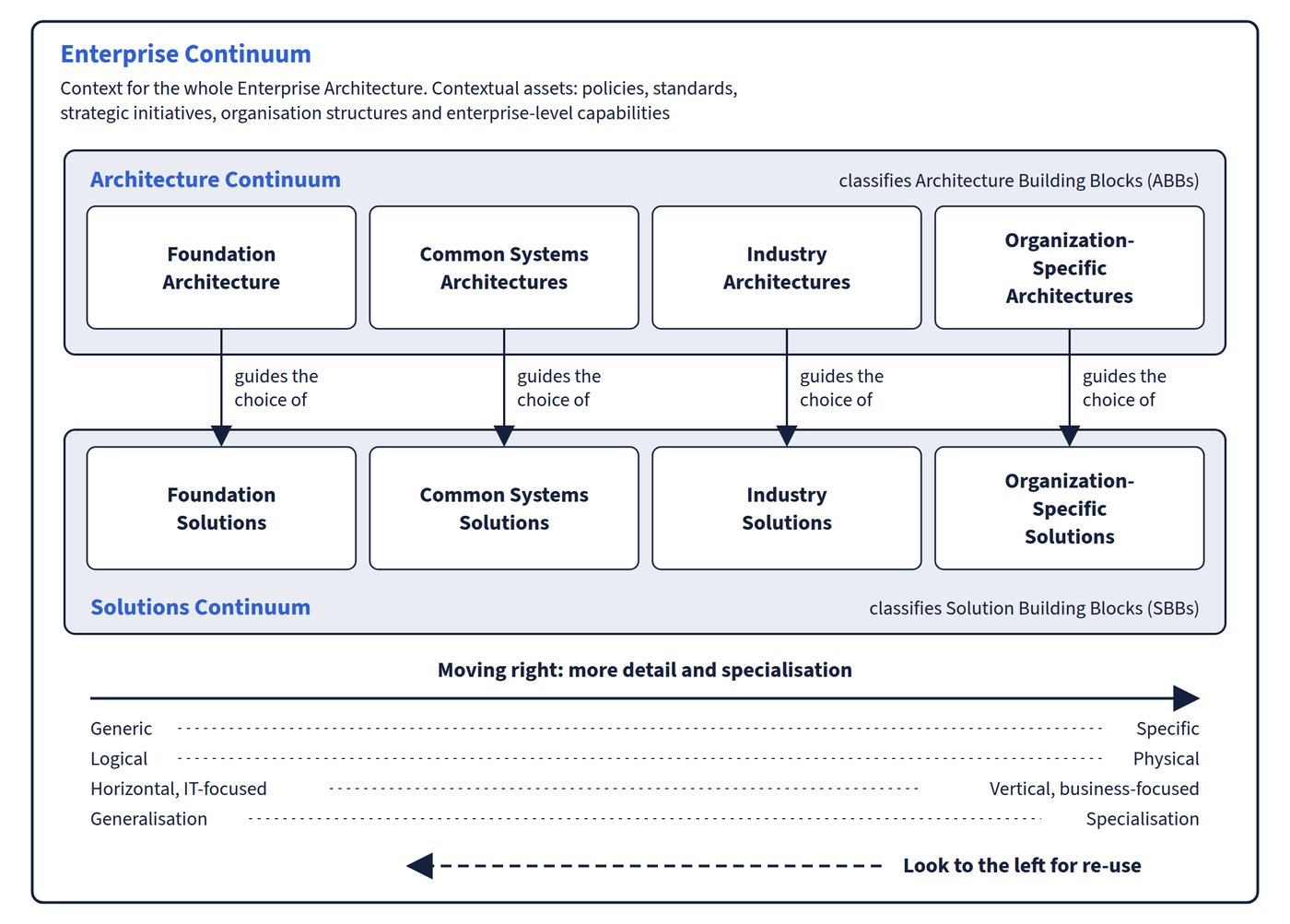
Why the Enterprise Continuum is a classification scheme rather than a place, and what it does for communication and re-use.
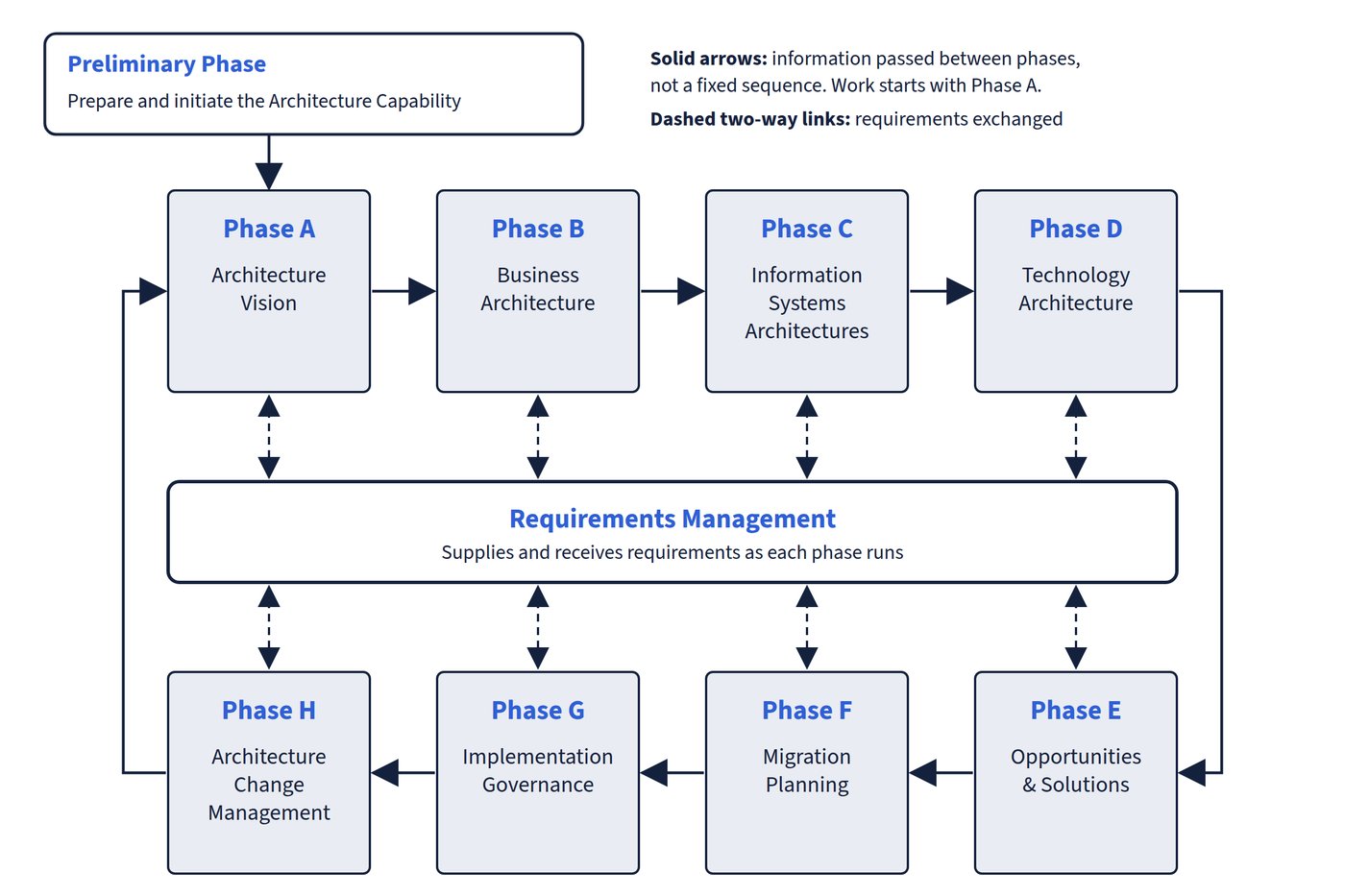
The Preliminary Phase, Phases A to H and Requirements Management, each with its purpose and essential output.
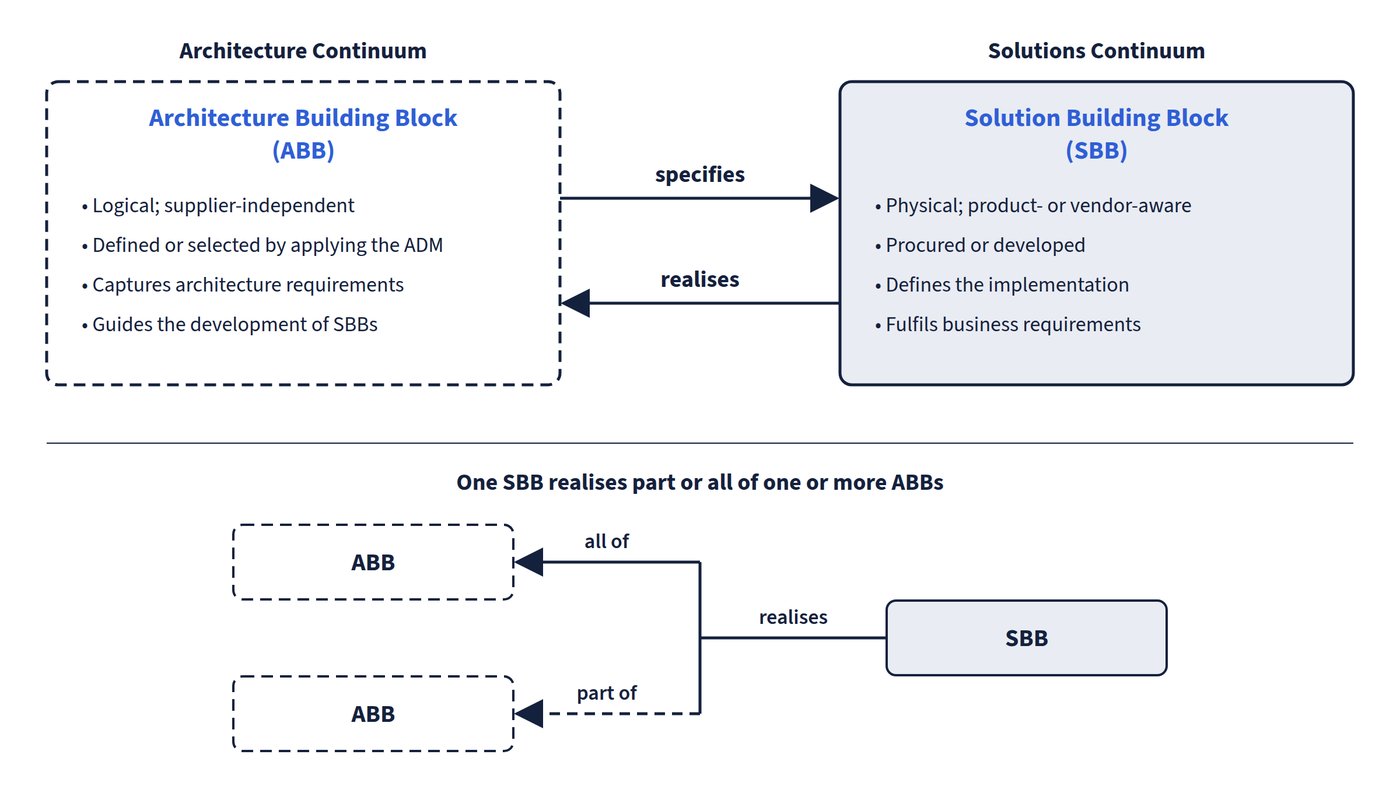
How to set Baseline Architecture Building Blocks against Target ones to see what is included, what is new and what is eliminated.
Architecture Capability, Architecture Development, Transition Planning and Architecture Governance iterations, and the phases each one spans.
What an Architecture Board is accountable for, who should sponsor it and how large it should be.
How stakeholders' concerns are framed by viewpoints and addressed by views, and why a view and a viewpoint are not the same thing.
A free week-by-week plan through the book at a 3-week or 6-week pace, with the study notes and exam skill areas for each week.