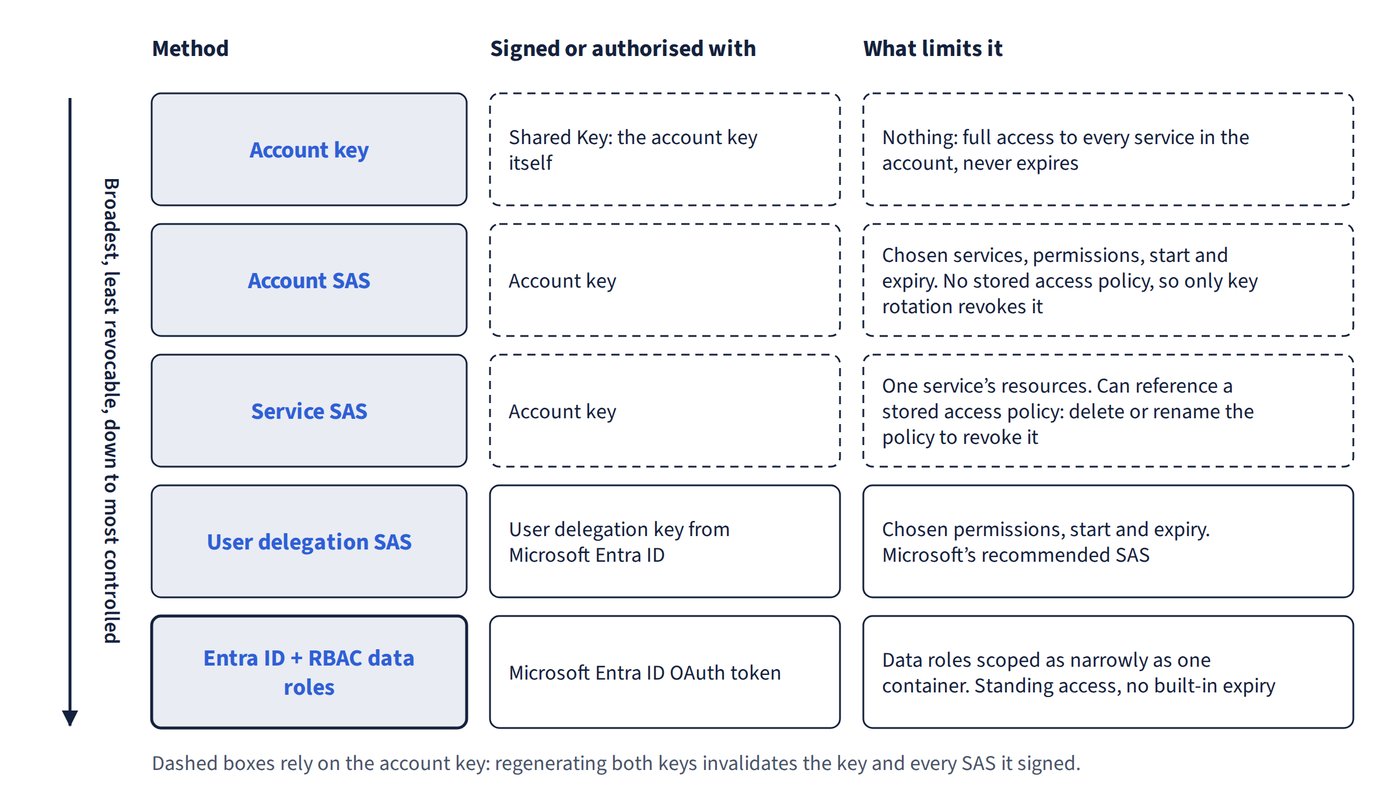
Once a request reaches the account, it must be authorised. Each method differs in which services it works with, how narrowly it can be scoped and whether it expires. Figure 5.1 ranks the methods from the broadest and least revocable to the most controlled.
| Method | Blob / Table | Azure Files SMB | Scope and lifetime |
|---|---|---|---|
| Shared Key (account key) | Yes | Yes (mount uses NTLMv2) | Full access to every service in the account, never expires |
| SAS | Yes | No | Chosen permissions, resources, start and expiry |
| Microsoft Entra ID OAuth (RBAC) | Yes | No (REST only) | Standing permissions, no built-in expiry |
| Kerberos (AD DS, Microsoft Entra Domain Services, Microsoft Entra Kerberos) | No | Yes | Identity-based SMB |
| Anonymous public access | Blob read only | No | Everyone |
- For scoped, expiring access by an external party, use a SAS; managed identities only exist for Azure resources you own, and RBAC has no time window.
- SMB clients authenticate with a Kerberos ticket; OAuth 2.0/JWT tokens are for REST (blob data, Azure Files over REST); SAML is web SSO, never SMB.
- Azure Storage Explorer connects to blob containers and file shares with a SAS URL (SAS works over the REST API). Robocopy and Windows File Explorer reach Azure Files only by mounting over SMB (account key or identity auth, no SAS) and cannot access blob containers.